Deep in the Internet abyss, past the viral videos and all the insufferable memes lies Common Ground, a haven where one can find solace and camaraderie through a shared passion for music.

Thursday, June 9, 2011

Spaghetti Western on the Radio


by Lucien Flores
The original version of this article was published on June 3, 2011 for the Daily Free Press
.


Danger Mouse & Daniele Luppi, Rome, Capitol, 2011
Brian Burton is a busy man. Known by his pseudonym, Danger Mouse, he has been a mainstay in the music industry ever since he mashed together The Beatles’ White Album with Jay’s Z’s The Black Album to much acclaim in 2004. Since then he has produced albums for The Black Keys, Beck and Gorillaz while also becoming one half of Gnarls Barkley (with Cee Lo Green) and Broken Bells (with James Mercer of The Shins).

While Danger Mouse can be frequently spotted creating and producing hip-hop and indie-rock, he has a strong affinity for the Italian cinema scores of the late 1960s and early 1970s, (think Ennio Morricone’s oft-imitated soundtrack of Sergio Leone’s The Good, The Bad and The Ugly) that stemmed from taking a film course his freshman year of college. Danger Mouse’ adoration for composers such as Morricone, Piero Umiliani and other stalwarts of Italian cinema ultimately fostered his friendship with the Italian producer and Rome co-creator, Daniele Luppi. Soon after meeting each other, Luppi and Danger Mouse became enamored with the idea of creating their very own Italian soundtrack masterpiece and after a half-decade of work, the final product, Rome (a record that Danger Mouse says influenced all his other work for the past five years), is finally out to the public.

Not wanting to skimp on any aspect of the album, Danger Mouse and Luppi did everything possible to preserve the sounds of those classic Italian scores. The two booked Morricone’s Forum Studios in Rome, collected a wealth of vintage instruments and recruited the very same musicians who contributed to the soundtracks that Danger Mouse and Luppi so admire. The pair also pulled some strings to reunite Cantori Moderni di Alessandro Alessandroni – a choir that was commonplace in Morricone scores – as well as 76-year-old Edda Dell’Orso – another favorite of Morricone and Sergio Leone – who provides atmospheric vocals on Rome’s opening track. In an interview with The Guardian, Danger Mouse commented on the bringing together of such musicians, saying, “First day, they all came in and you could tell it was the first time they had been in the same room for a long time. They were hugging, some tears. But then, about two hours in, they’re all yelling at each other.” These veteran musicians, now in their 70s and 80s, provide the life and authenticity of this album.

The Mustache of Greatness: Jack White
Danger Mouse’s Ocean’s Eleven recruitment strategy continued as the brilliant workhorse Jack White and the delicate Norah Jones were enlisted to contribute vocals.  The highlights of this album are Jack White’s three tracks. “The Rose With The Broken Neck,” the album’s first real song, is superb as a familiar higher-voiced Jack White duets with an unfamiliar sounding, lower-pitched Jack White. “The World” is another standout featuring an almost nervous sounding White. However, White’s strongest number and the album’s best track is the fast-moving, all-too-short, “Two Against One.” Starting with clean guitar, White’s impressive fast-talking lyrics and a playful harpsichord soon take over before the song ends much too quickly. Normally we hear White’s voice in front of the bluesy garage-rock of The White Stripes, the gloomy macabre of the Dead Weather and the 70s rock-pop of the Raconteurs; rarely do we get the pleasure of hearing him accompanied by the sweeping and eclectic sounds of an orchestra, and this makes Rome a delight to listen to.


While Norah Jones’ numbers aren’t quite as spellbinding as White’s, “Black,” “Season’s Trees” and “Problem Queen” are all very strong and interesting in their own right and suit her perfectly raspy voice.

Rome is a joy to listen to as we are treated to a multitude of rare instruments. The album’s three short interludes are surprisingly captivating and certainly add to the cinematic feel of the album. With that said, the album can drag a bit due to some uninteresting instrumentals, however, the strength of Rome’s lyrical track
Brian Burton is a busy man. Known by his pseudonym, Danger Mouse, he has been a mainstay in the music industry ever since he mashed together The Beatles’ White Albumwith Jay’s Z’s The Black Album to much acclaim in 2004. Since then he has produced albums for The Black Keys, Beck and Gorillaz while also becoming one half of Gnarls Barkley (with Cee Lo Green) and Broken Bells (with James Mercer of The Shins).

While Danger Mouse can be frequently spotted creating and producing hip-hop and indie-rock, he has a strong affinity for the Italian cinema scores of the late 1960s and early 1970s, (think Ennio Morricone’s oft-imitated soundtrack of Sergio Leone’s The Good, The Bad and The Ugly) that stemmed from taking a film course his freshman year of college. Danger Mouse’ adoration for composers such as Morricone, Piero Umiliani and other stalwarts of Italian cinema ultimately fostered his friendship with the Italian producer and Rome co-creator, Daniele Luppi. Soon after meeting each other, Luppi and Danger Mouse became enamored with the idea of creating their very own Italian soundtrack masterpiece and after a half-decade of work, the final product, Rome (a record that Danger Mouse says influenced all his other work for the past five years), is finally out to the public.

Not wanting to skimp on any aspect of the album, Danger Mouse and Luppi did everything possible to preserve the sounds of those classic Italian scores. The two booked Morricone’s Forum Studios in Rome, collected a wealth of vintage instruments and recruited the very same musicians who contributed to the soundtracks that Danger Mouse and Luppi so admire. The pair also pulled some strings to reunite Cantori Moderni di Alessandro Alessandroni – a choir that was commonplace in Morricone scores – as well as 76-year-old Edda Dell’Orso – another favorite of Morricone and Sergio Leone – who provides atmospheric vocals on Rome’s opening track. In an interview with The Guardian, Danger Mouse commented on the bringing together of such musicians, saying, “First day, they all came in and you could tell it was the first time they had been in the same room for a long time. They were hugging, some tears. But then, about two hours in, they’re all yelling at each other.” These veteran musicians, now in their 70s and 80s, provide the life and authenticity of this album.

Danger Mouse’s Ocean’s Eleven recruitment strategy continued as the brilliant workhorse Jack White and the delicate Norah Jones were enlisted to contribute vocals.  The highlights of this album are Jack White’s three tracks. “The Rose With The Broken Neck,” the album’s first real song, is superb as a familiar higher-voiced Jack White duets with an unfamiliar sounding, lower-pitched Jack White. “The World” is another standout featuring an almost nervous sounding White. However, White’s strongest number and the album’s best track is the fast-moving, all-too-short, “Two Against One.” Starting with clean guitar, White’s impressive fast-talking lyrics and a playful harpsichord soon take over before the song ends much too quickly. Normally we hear White’s voice in front of the bluesy garage-rock of The White Stripes, the gloomy macabre of the Dead Weather and the 70s rock-pop of the Raconteurs; rarely do we get the pleasure of hearing him accompanied by the sweeping and eclectic sounds of an orchestra, and this makes Rome a delight to listen to.

While Norah Jones’ numbers aren’t quite as spellbinding as White’s, “Black,” “Season’s Trees” and “Problem Queen” are all very strong and interesting in their own right and suit her perfectly raspy voice.

Burton, Jones, Luppi, and White
Rome is a joy to listen to as we are treated to a multitude of rare instruments. The album’s three short interludes are surprisingly captivating and certainly add to the cinematic feel of the album. With that said, the album can drag a bit due to some uninteresting instrumentals, however, the strength of Rome’s lyrical tracks and interludes allow listeners to forgive these less interesting moments.

Rome sets the imagination wild by evoking the harsh desert terrain, black-clad baddies and unkempt facial hair of any Clint Eastwood western. However, no matter how entertaining the album is, Rome’s best moments can never reach the cinematic spiraling highs of an Ennio Morricone score. Ultimately, Rome is a quality record that arose out of ambitious project to pay tribute to the greatness of Italian cinema soundtracks and it certainly delivers. Bravo, Danger Mouse, bravo.

Overall Grade: 8

Monday, May 16, 2011

The Puzzling Madmoiselle Adele: A Look at "21"

Yes, I realize this review comes quite a bit after the release of "21." Yet, Adele's enormous success and recent launch of a North American tour renders Adele still very much relevant.
A slightly different version of this review appeared on The Arts Fuse.
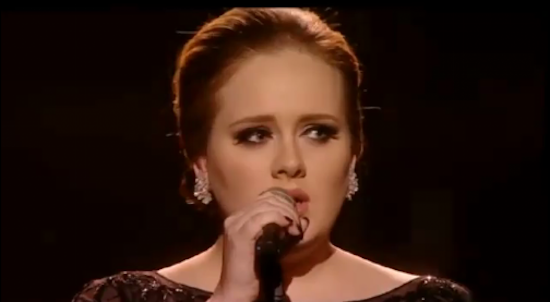
Adele looking for "Someone like You" at the Brit Awards
Adele puzzles me. 
A recipient of two 2009 Grammy’s (and three additional nods) for her debut album, 19, Adele drowned the meager wheezes of Katy Perry, Pink, and Leona Lewis to fill the halls of the music industry with her resonating voice. Critics hailed Adele as refreshingly different, a return to the soul & style of Carnaby St. – far preferable to dreary Top 40.
I tuned into the 2011 Brit Awards in February to hear a sample from her sophomore album 21 and can report that her stunning performance of “Someone Like You” left both the home audience and Adele herself in tears after her broken heart determinately fought for a second chance. Yet, upon hearing all of 21, my heart began to break as well, but not because of Adele’s ability to translate emotion. Far too many of the songs – in fact, half of the albums tracks -- sound like Katy Perry and Pink and Leona Lewis.
Adele puzzles me.  
But to begin positively…21’s strongest pieces are those that ironically stray from her award-winning formula of intense heartbreak.
21 opens with unquestionably its best: “Rolling in the Deep.” Punctuating Adele’s silence since 19, a quick-moving, heavily-thumbed guitar line begins, setting metronome-like time for the piece. Adding contrast, the swirls of Adele’s voice enter and swim through the auditory space. The song soon layers, adding bass drum, piano, lead guitar, and Supremes-like backing vocals to paint Adele’s infuriation with an ex-lover she plans to overwhelm in a rage of revenge. Cultured Adele reveals her classical training too, including quintessential blues allusions like “roll your stone” and “reap just what you sow.” This recall of Mississippi Delta ghosts, combined with Adele’s smooth vocals that leech venom, render the track sumptuously addictive.  
The same percussive momentum continues into the following “Rumour Has It,” a track set to the time of a throbbing floor tom-tom mixed with cool, snipey “ooh’s”, reminiscent of 1960s. This time, Adele harnesses an even darker side, shamelessly alluring her flame to leave his proper lover. Adele and her accompanying piano are seductively vindictive, reminding her beau not only of her superior lovemaking, but also how she’s “cold to the core,” tantalizing both her lover and the audience to join her sinful indulgence. 
Melodramatic...

It is at this point that the album begins its decline. “Turning Tables” is a melodramatic declaration in which Adele promises to leave behind a lover who continues to trifle with her affections. While the subject matter itself is moving, Adele’s treatment is not.  The piano and strings weep slowly, weighed down with their oversaturated emotion – sentimentality that’s been done before. They lyrics aren’t particularly innovative either. Lines like “Under your thumb, I can't breathe” are not only derivative, but their generality doesn’t translate the emotion Adele hopes to and causes the reader to pray for a quick table turn to the next track.
“Turning Tables” sounds remarkably close to “The X-Factor” product Leona Lewis’ “Run” and unfortunately, the echoes of Top 40 on 21 continue.  “He Won’t Go” sludges along in monotony to a J-Lo-like pop beat.  “Take It All” fuses Christina Aguilera and Alicia Keyes with a solo piano occasionally accompanied by a gospel voices that chime in on unimaginative lyrics like “How can you walk away from all my tears?” “Lovesong” melts into a bossnova that could appear as any Aguilera or Shakira B-Side and is only slightly redeemed in its background hint of organ, an instrument rarely featured in Top 40. “Set Fire to the Rain” combines all of these influences, creating the most generic pop song on the album. Recognition of the unoriginality of these songs is not meant to suggest plagiarism, but rather an inability to escape the pressures of the mainstream.
Adele: Whhhyyy? Critics hailed you as a beacon of originality, someone to move us away from repetitive Top 40! I didn’t think seeing all those pop stars at Staples Center in 2009 would be so intimidating… Adele – you puzzle me!

Adele Still Reigns Supreme.
Yet, this disappointing imitation shrinks in the shadow of the album’s closer, “Someone Like You.” Accompanied by only a piano, Adele’s respiratory system seemingly inflates on this track, dragging anguish out of the depths of herself to purge her body of her sadness. While the track is an acknowledgment that her past love has happily moved onto another, she literally begs him not to forget her, an agonizing appeal to hear. Despite her range on this track, Adele’s vocals are intimate, envelop the listener in misery, and seemingly encourage an impromptu duet to mourn past lovers together – which usually happens…
The emotion Adele summons in “Someone Like You”, amplified even further in her Brit Awards performance, reassures tactful listeners that her reign as 2009 Best New Artist over dispassionate Top 40 artists isn’t over. Yet, her slip to the mainstream on 21 is evidence she’ll have to fight to avoid that world; perhaps this means choosing a producer other than Columbia Records co-president Rick Rubin who mixed 21. Until then, even with this recent dimming, Mademoiselle Adele’s beacon of originality will continue to twinkle and Adele herself will remain a puzzle.
A Note:
Michela recommends 21 (Bonus Tracks) over the widely-released 21 reviewed here on ArtsFuse. 21 (Bonus Tracks) features five additional tracks which Michela finds makes the album far superior to the original release. 


Overall Grade: 7.5

Thursday, April 28, 2011

Kickin' It With Keeler (Patrick Keeler of The Greenhornes/Raconteurs)

by Lucien Flores
The original version of this article was published on April 7, 2011 for the Daily Free Press.
 Patrick Keeler at Work

A few weeks ago Common Ground's Lucien Flores talked over phone with Patrick Keeler whose band - the three-piece garage rockers The Greenhornes - played Brighton Music Hall last night.  The Greenhornes’ sound drips of their influences (those quintessential 1960s bands such as The Who, The Kinks, The Stones, The Animals, and others that defined a generation) and their latest album, ★★★★ (4 Stars), dropped late last year to positive reception.  The band is composed of guitarist/vocalist Craig Fox, bassist Jack Lawrence, and drummer Patrick Keeler.  


Keeler is the band’s impressive drummer and even if you don’t recognize the name you’ll be sure to his recognize his work. Aside from founding The Greenhornes in 1996, Keeler and fellow bandmate Jack Lawrence comprise the rhythm section of Jack White and Brendan Benson’s supergroup, The Raconteurs (you might recognize them for their hit “Steady As She Goes.”). Keeler, Lawrence, and White also collaborated on Loretta Lynn’s Grammy-winning album, Van Lear Rose, and Wanda Jackson’s recent The Party Ain’t Over. We at Common Ground are very thankful that Keeler who, even while suffering from a cold, sacrificed his time to answer a few of our questions.  He seemed equally as appreciative for the chance of being interviewed and came off like a genuinely nice and down-to-earth person.

Lawrence, Fox, and Keeler
LF: ★★★★ was the Greenhorns’ release after a pretty sizable hiatus. [In fact, ★★★★ is the band’s first studio album in eight years]  What were those first rehearsals after being apart?
PK: It was pretty amazing. We didn’t really rehearse so much…to make the record. In the studios we got shows booked when we were ready to put out the record. Those rehearsals were pretty amazing. Just kind of going back to everything we’ve ever done since 1996 and how easily a bunch of the old stuff kind of came out and how hard it was to do the new stuff.
LF: You guys formed in ‘96. What’s it like playing with the same two guys for so long? What’s your relationship like now and just how much have you grown together as musicians?
PK: As musicians we’ve all really grown up together and just kind of play off each other, listen to each other, and make each other better for sure. You grow up and you know each other a little better and it’s going well.
LF: I think it’s pretty safe to say that The Greenhornes and The Raconteurs have this 60s/70s influence. How did you yourself get introduced to the era of music?
PK: I think it was just growing up; where I grew up and the kind of music my dad listened to and my older brother listened to and it was kind of discovering what you like. I guess I only liked that kind of music. That was what I had most access to and I guess it stuck with me better. We all a kind of similar taste in music and that’s how we all got together in the first place.
LF: Whom do you consider your biggest influences in terms of drummers?
PK: Hmm, I don’t know. I’ve got a lot of them. Probably Buddy Rich or Mitch Mitchell.
LF: We’ve been talking about the music from the 60s/70s, however, what contemporary music to you listen to?
PK: I like Dungen a lot…it’s a Swedish band, called like “Dungeon”… sort of… but [in] Swedish (laughs). I like them. I like a lot of stuff. I listen to a lot of stuff
LF: What do you find yourself doing when you come to Boston? Are there any spots you tend to frequent or is it different every time?
PK: I’m dying to really try a Wagamama there. I want to do a general compare and contrast. That’s like the food that saves you when you’re in Europe…in the UK…and now they have them in Boston. I would love to try that.
LF: You’ve been very busy over the last couple years. You and Jack Lawrence played in the Raconteurs and played on Loretta Lynn’s [Van Lear Rose] and Wanda Jackson’s [The Party ‘Aint Over]. How do you manage all these projects?
PK: Well, it’s a lot easier than you think. You just show up and play (laughs). But I’ve been fortunate to get to work with some very cool people.
LF: Were you yourself influenced by their music styles?
PK: I think you always pick up something from whatever you do. Anytime you record something new with somebody else, you’re going to pick up something. 


LF: Did you find that The Greenhornes find a heightened popularity with these other projects?
PK: Yeah we’ve benefitted from all of us doing different things over the years.  Getting back together, kind of doing it the way we would traditional we would do it, which was, we never had an idea of how to do this stuff (record or anything). It’s all trial by error, you know?

LF: How’s the fan support been for your first tour in a while and your first album in years?
PK: Oh it’s been great man. It was cool in a way that we took a break because now there’s people that were way too young or that didn’t know us before, that never saw us, that are coming out. It’s been really good.
LF: During your hiatus, did it ever look like the Greenhornes were done or was there always a belief that you guys would come back and finish the album?
White, Keeler, Lawrence, and Benson: The Raconteurs
PK: Well we were always working on our record. We’re not quitting at that point, it’s like why quit if we’ve been a band this long?
LF: Do the Raconteurs have any future plans?
PK: Yeah, I’m sure we do somewhere down the line. I’m sure we’ll do something some day.
LF:  You’ve talked about how you guys were working on ★★★★ for a while. What were you guys try to do differently on this album compared to any of your earlier albums?
PK:  Well we weren’t trying to do anything. We recorded this one differently by kind of writing the songs in the studio. Before we had already had songs ready to go and we knocked ‘em out really quick. This one, we just took our time and worked the songs in the studio. It probably shows its difference that way.
LF: Jack Lawrence makes his vocal debut for The Greenhornes on this album [on the songs “Go Tell Henry”], now, do you ever possibly see yourself doing that down that line?
PK: I don’t know. At the moment I can barely do a speech because I’m sick (laughs). I don’t think so. I don’t know. I have no idea.

Tuesday, April 19, 2011

Guest Review - Cold War Kids' "Mine Is Yours"


Cold War Kids, Mine Is Yours,
Downtown, 2011

We at Common Ground are very excited to present our first ever guest contribution. Raul Flores provided us with a review of the Cold War Kids latest album. Look for more pieces by him and others in the near future. If you'd like to submit an article, leave us a shout. 

April 19, 2011

As someone who has really come to enjoy the Cold War Kids music since their 2006 debut Robbers and Cowards, I was pretty excited for the release of Mine is Yours.  I thought the 2010 EP Behave Yourself showed the band's ability to successfully capture a pop friendly sound in "Audience" while demonstrating some musical exploration in "Sermon" without losing the essence of the band – Nathan Willett's distinct and soaring vocals, guitarist Jonnie Russell's empty-room echo and reverb, a compact looseness of the bass and drums, along with a certain dirty attitude and edge that defined Cold War Kids.  I was hoping a new release would exhibit the band's growth over the past five years but maintain the essence that turns these California kids into the Cold War Kids.  Unfortunately, Mine is Yours sounds like a band going through an identity crisis and foregoing the edge displayed on previous recordings like "Hang Me Out to Dry" where the attitude seemed to be "I'm just gonna bang on this piano and see what happens."

For Mine is Yours, the Cold War Kids teamed up with producer Jacquire King who previously helped Kings of Leon achieve mainstream stardom with pop songs like “Use Somebody.”  The Cold War Kids seem to be looking for a similar destiny of commercial success on their latest album – and although I hope they achieve it, it comes off a little forced and overproduced.  That’s not to say this is a bad album, it’s a perfectly fine and listener friendly album with some solid songs like “Royal Blue”, but it’s not what I hoped for from the Cold War Kids and in the end it’s rather…forgettable.

The two strongest tracks on Mine is Yours are “Royal Blue” and “Cold Toes on the Cold Floor.”  If the Cold War Kids were going for an album with catchy choruses that hook the casual listener, I wish they would have followed the lead of tracks like “Royal Blue” which doesn’t quite invoke the unique themes and struggle of prior Cold War Kids songs, but still stays somewhat true to the band’s sound.  No one is going to mistake Willet’s struggle to be all in with his love in “Royal Blue” with alcoholism in “We Used to Vacation”, but I can live with that.  Near the end of the album, “Cold Toes on the Cold Floor” finally brings back a little of that bluesy raunchiness that turned me into a Cold War Kids fan and adds a few newer elements such as a little spacey organ that separates it enough from previous works to be interesting (although I could live without the line “so good to be making scrambled eggs with you”)

Other tracks on Mine is Yours signify a shift away from the band’s previous work into something a bit grander and perhaps more challenging.  The track with the most success in this category is “Out of the Wilderness” which grew on me after a few listens – it’s not a song that will blow you away, but you can at least understand the growth the band is trying to exemplify.  Along these lines, “Sensitive Kid” is a bit more classic Cold War Kids in Willet’s vocals during the verses.  The song also introduces us to the for-some-reason-indie-friendly drum machine, an unremarkable chorus and ending that fell flat on me.

The rest of the album is a strange mixture of generic rock, arena rock, sing-alongs, and having to remind yourself that you are indeed listening to the Cold War Kids.  The strongest of the “hey, maybe we’ll get famous” tracks is “Louder than Ever” which has decent verses, not-so-great lyrics, blah bridge, and what might be the catchiest of all choruses on the album…you can’t listen to this song without picturing a concert-full of people waiving their hands in unison and screaming “I CAN HEAR YOU LOUDER THAN EVERRRR!”  It’s not a bad track for what it is but not the most creative.

“I CAN HEAR YOU LOUDER THAN EVERRRR!”
The remaining tracks are really summed up by “Finally Begin” which at one point I completely forgot I was listening to the Cold War Kids (save for Russell’s guitar).  If there’s a song that hooks the teenage girls in, this is it.  It’s generic, catchy, comfortable, has an already released cheesy video, and I can honestly see this song being an opener for bands like Train and The Script.  Although not quite as drastically poppy, “Mine is Yours”, “Skip the Charades”, “Broken Open” and “Flying Upside Down” are all about love lost or found, boy/girl and sadly a bit generic.  There are times during these songs where I was like “you know what, this is a pretty good song”, but in an “I’m in line at the supermarket or listening to the radio without my ipod” kind of way.  “Bulldozer” is a little more experimental but it again explores the boy/girl theme and ventures a bit on U2 styled arena rock.

In conclusion, there are some strong points to Mine is Yours that shouldn’t be overlooked just because the album isn’t as strong as previous releases.  I’ll also add that after seeing the Cold War Kids during their current tour, a lot of these songs were strong in concert where they were a little more raw and less produced – in fact, I enjoyed seeing them this year more than in previous years.  I also applaud the Cold War Kids for trying some new things on this album, but a lot of it just falls flat on me.  I think an example of doing this right is the Black Keys (read our review of their latest album, Brothers) who went into the studio with Danger Mouse for Attack & Release and came out with a song like “Psychotic Girl” which, while different, was uniquely Black Keys.  I just hope that the Cold War Kids don’t lose those qualities that make them unique and can simply expand upon them.  To be honest, I’m interested to see where this goes – whether they will find commercial success with Mine is Yours or return to their roots with a new album.  But for now, this album made me yearn for the dirtiness of Robbers and Cowards and Loyalty to Loyalty.

Overall Grade: 6 

Saturday, April 16, 2011

DeVotchKa Conquers Paradise

by Lucien Flores
The original version of this article was published on March 29, 2011 for the Daily Free Press.

The eclectic indie rock outfit DeVotchKa brought their Eastern-European romps, Latin flair and theatric indie-rock to the Paradise Rock Club on Saturday in what proved to be a tremendously fun evening. The opening act, Mariachi El Bronx – a side project of hardcore rockers The Bronx – fully embraced their traditional Mexican alter egos. Dapper in ornate black charro outfits, they got the audience dancing to the harmony of vihuela, GuitarrĂ³n, trumpet, violin and more. After El Bronx’s lively 30-minute set, DeVotchKa took the stage, kicking things off with “The Alley,” the opener of their most recent album, 100 Lovers. While DeVotchKa seems intent on reaching the cathartic highs of bands such as Arcade Fire on 100 Lovers, they still are an act that’s ripe for intimate settings reminiscent of their early burlesque days, and their showing at Paradise certainly reflected that.

Urata Parties On During "Ranchero"
Lead singer Nick Urata delivered lyrics in his perfectly sultry voice. His graying scruff, a perfect complement to his passionate croon, heightened his suave wine-swigging, all-black-wearing persona. While Urata was certainly not a man of many words, he forged a great connection with the audience. During the band’s indie-classic, “How It Ends,” Urata had the audience take over, turning his microphone to the loyal supporters who returned the love by sharing lyrical duties.

DeVotchKa pulled from all over their collection in their 19-song set.  Highlights include “The Man From San Sebastian” with its sinister cinematic Spanish flair, their menacing Mexican Western “The Enemy Guns” and the unexpected and simple accordion and guitar cover of Neil Young’s “Only Love Can Break Your Heart.” However, it was DeVotchKa’s many Eastern-European romps that really took the show to higher level. Songs such as “Basso Profundo” and “Vengo! Vengo!” got the audience moving and grooving to the sounds of accordion, violin and a sousaphone ornamented with multicolored Christmas lights.

The band closed with “Ranchero,” a track with modest beginnings that soon transformed into yet another buoyant European number. What made the piece even more stirring was Urata’s use of two unconventional instruments, the bouzouki and Theremin, the former being a Greek mandolin-looking instrument that delivered an unexpectedly dark vibe while the latter is an eerie sounding electric device. Throughout the song, Urata frantically played his bouzouki while performing a leg-kicking jive reminiscent of a Russian folk dance. Urata then ventured over to the Theremin, playing both instruments at once, much to the delight of the audience. After what felt like 10 exhilarating minutes, Urata thanked the audience, took a swig of wine, raised his arms and spilled all over himself. This didn’t perturb him, and he nonchalantly went back to playing the bouzouki, this time with the wine bottle.

Overall, DeVotchka’s worldly roots blended effortlessly with their indie rock for a captivating show. They played a lively hour and a half in front of a highly energetic crowd, proving that the bouzouki can certainly be badass.

DeVotchKa "100 Lovers"

We're aware that we haven't written much recently so we're going to overwhelm you with posts today.  The first of many will be an album review of DeVotchKa's 100 Lovers.

by Lucien Flores
The original version of this article was published on March 18, 2011 for the Arts Fuse.

DeVotchKa, 100 Lovers, Anti-, 2011
The members of DeVotchKa call Denver, Colorado home, but the quartet is not your standard indie rock outfit by a long shot. Eclectic to the point of the omni-cultural, the band is one of those rare musical acts that, like Beirut and Gogol Bordello, makes use of the rhythms and riffs (Slavic, Romani) of Eastern-European music and dares to go further, experimenting with Mariachi, Indian, folk, punk, and more.

Lead singer Nick Urata croons passionately with a distinctively slurred, almost accented voice while also playing a hodgepodge of instruments from the standard guitar and piano to the more unusual (at least for indie rock) trumpet, theremin, and bouzouki. Other instruments the quartet uses are the sousaphone, violin, and accordion.


When DeVotchKa effortlessly meshes these global influences and uncommon orchestration, the results can be galvanic, from amazingly fun, Eastern European romps (“C’est Ce La”) to grandiose, indie-rock anthems (“How It Ends”). And its sound is finally being recognized by a broader audience. After struggling as a burlesque band for a few years, the band’s 2004 effort How It Ends made some real noise on the indie scene. However, it wasn’t until after being nominated  in 2006 for a Grammy Award for “Best Compilation Soundtrack” for the film Little Miss Sunshine that the band garnered more recognition.


The group’s most recent album, 100 Lovers stays true to form, featuring a multitude of musical influences. Eastern European riffs predominate, though mariachi and Latin sounds dominate the last few songs.


The album’s opening song, “The Alley,” is a microcosm of the album itself. A trance-like ambiance is established and followed by a marching snare; the tune’s daze is finally blasted away by crashing cymbals and Urata’s eerie voice. The model for the track is the fireworks of Arcade Fire: the group comes closest to that sound with “All The Sand In All The Seas,” one of the strongest tunes on the album. The menacing (at times) track is driven by rollicking piano, ambient guitar, and marching drum.


“100 Other Lovers” is the album’s catchiest and strongest number. After generating a dreamlike spell, Urata’s  vocals jolt us awake, while the sounds of strings and a delectable organ supply some charm. At the end, the song returns us to the opening trance and fades out, which brings the indie rock segment of the album to an end.


On “The Common Good,” DeVotchKa experiments with an Indian sound, commencing with hand-claps and frantic strings. However, the Indian influence is abandoned after shimmering strings and a rollicking snare are introduced. The experiment with an Indian sound is admirable, but the latter is used so halfheartedly that the attempted fusion with indie rock doesn’t come off.


Starting with “The Man From San Sebastian,” the album embraces a wealth of Latin influences. “San Sebastian” is a remarkably fun song with sinister Spanish influences; bright accordion and undulating guitar combine to create an atmosphere that’s ripe for danger, sword fights, and pencil thin mustaches. The bright horns of mariachi make their way into “Bad Luck Heels,” while “Contrabanda” has an almost-cumbia flair to it. On the unique “Ruthless,” Urata flirts with Spanish lingo and guitar, supported by timbales, quicksilver accordion playing, and theatrical strings.


The one exception to the second half Latin explosion is “Exhaustible,” a light, lazy afternoon love song with a whistle chorus and cheery background vocals. Ending with the group bursting into laughter, the whimsical song is a nice change of pace from the busier tracks.


Overall, 100 Lovers strikes me as DeVotchKa’s admirable and ambitious effort to create a grander sound. The band reaches for the brilliantly combustible heights of Arcade Fire’s magnum opus Funeral. At times it ends up working too hard and falls short. But listeners expect nervy diversity from DeVotchKa, and the group delivers on its efforts to make indie rock with plenty of exotic flair. DeVotchKa comes to Boston’s Paradise Rock Club on March 26, which will be its only Massachusetts stop. If nothing else, when else are you going to see a sousaphone live? 


Overall Grade: 7.5